Intracytoplasmic Sperm Injection (ICSI) is a specialised IVF technique where a single, healthy sperm is injected directly into an egg to achieve fertilisation. It is one of the most effective tools available for overcoming male-factor infertility.
ICSI (Intracytoplasmic Sperm Injection) in Qatar is typically considered when sperm count, motility or morphology may make natural fertilisation — even in a standard IVF lab setting — less likely to succeed.
The procedure is carried out at Al Shaheen Medical Center in Duhail, Doha as part of a full IVF cycle, following egg retrieval, and is followed by the same embryo culture and transfer process as conventional IVF.
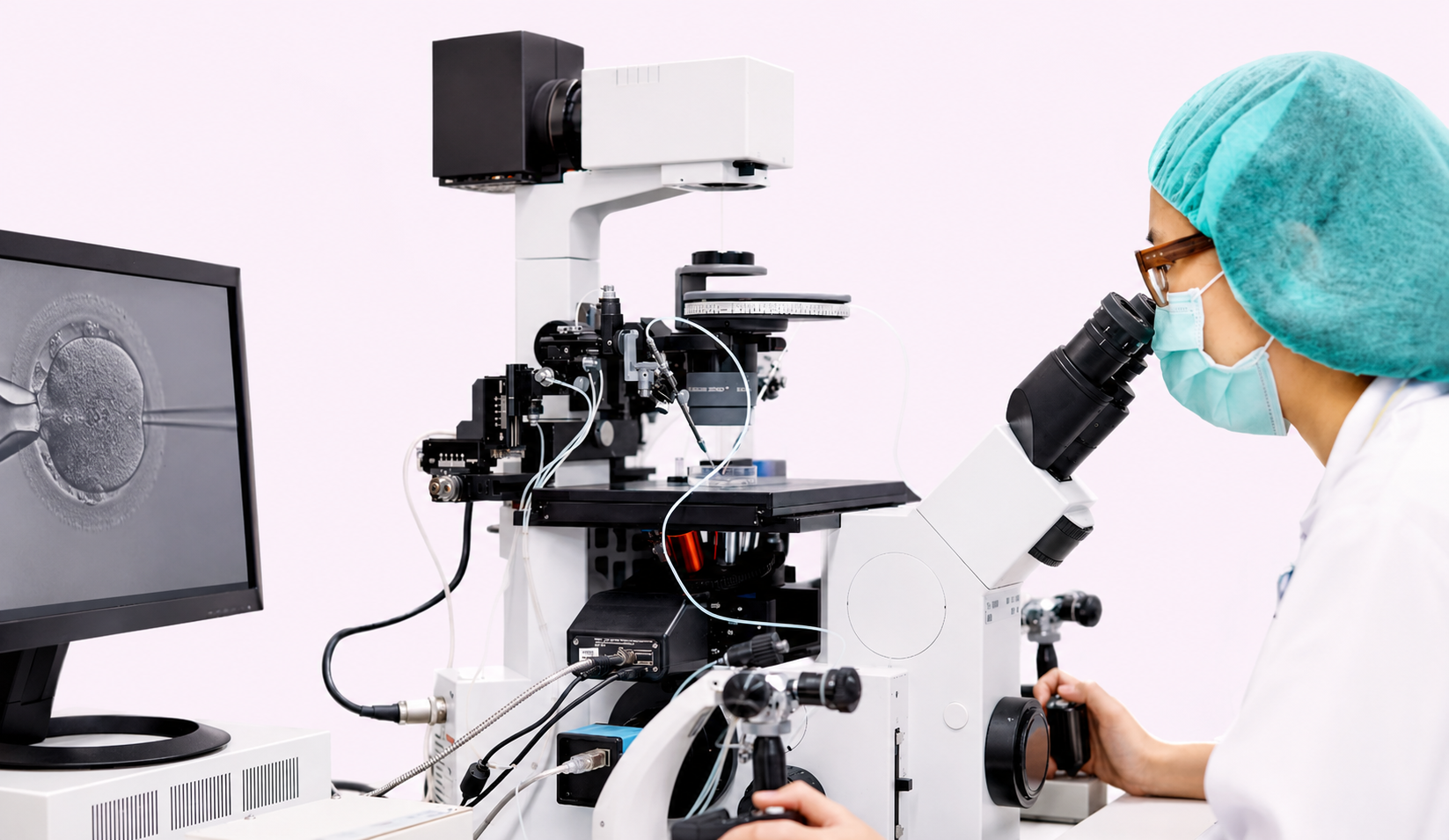

ICSI is most often considered for couples facing male-factor infertility — including low sperm count (oligospermia), poor motility (asthenospermia), or abnormal sperm shape (teratospermia).
It may also be used following a previous IVF cycle with low or failed fertilisation, when using surgically retrieved sperm, or with frozen sperm samples of limited quantity.
In some cases ICSI is used even without a diagnosed male-factor issue — for example when using frozen eggs, or where there is a history of unexplained fertilisation failure.
A closer look at the ICSI fertilisation process.

ICSI is carried out as part of a full IVF cycle — following ovarian stimulation and egg retrieval, each mature egg is individually injected with a single selected sperm under high-magnification microscopy.
Sperm quality is assessed carefully before selection, choosing the healthiest-looking sperm available to support successful fertilisation and healthy embryo development.
ICSI (Intracytoplasmic sperm injection) in Qatar is followed by the same embryo culture and monitoring process as a standard IVF cycle, with Dr. Radhika Pentyala reviewing progress before deciding on the embryo or embryos for transfer.
How ICSI fits within your IVF cycle.
Hormone therapy to develop multiple eggs.
Eggs collected, sperm sample prepared.
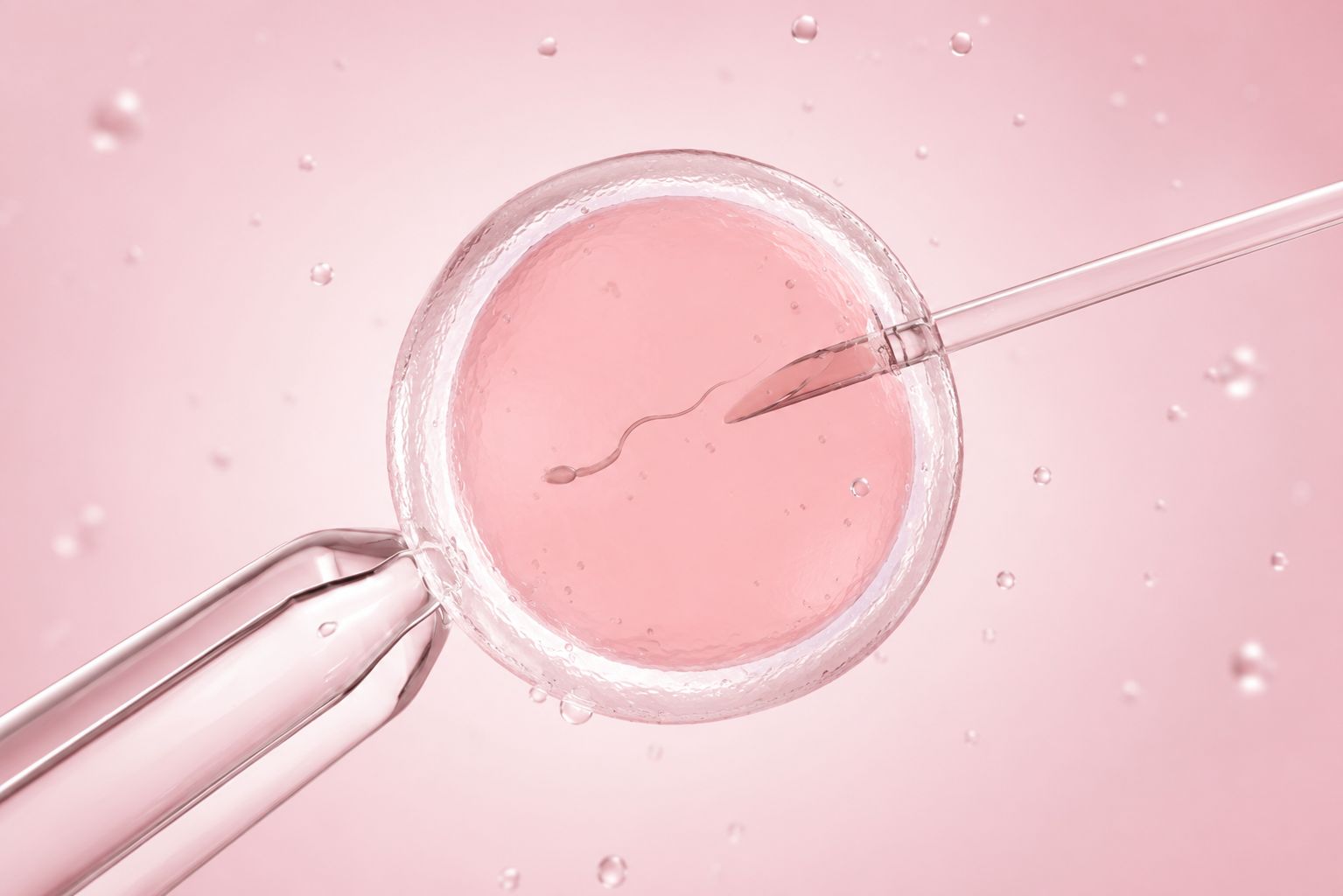
A single sperm injected into each mature egg.
The selected embryo transferred to the uterus.
Common questions about ICSI.
In standard IVF, sperm and eggs are combined and fertilisation happens naturally in a lab dish. With ICSI, a single sperm is injected directly into each egg — useful when natural fertilisation is less likely to succeed.
ICSI improves fertilisation rates in cases of male-factor infertility, though overall pregnancy success still depends on factors such as egg quality and age.
ICSI has been used successfully for decades and is considered a safe, well-established part of assisted reproduction.
ICSI is typically an add-on to an IVF cycle and does carry an additional cost.
Couples with diagnosed male-factor infertility, a history of failed fertilisation, or those using surgically retrieved or frozen sperm.
The cost of ICSI varies depending on the fertility center, IVF treatment plan, laboratory services, medications, consultations, and additional procedures required. Patients should confirm what is included in the treatment package.
Book a consultation with Dr. Radhika Pentyala today.
Book a Consultation